
How American Fork People Search Works
A sound search begins with the fact already known. A full or partial name points toward the Utah County owner roll, recorded deeds, court parties, professional licenses, business filings, and historical name indexes. An address works differently. It can lead to a parcel, a current owner, an owner mailing address, prior recorded transfers, and then older occupants in newspapers or school records. A phone number or email may help distinguish two people, but official American Fork records seldom offer a broad reverse search for those fields.
Use one record to find the key for the next. The parcel serial number connects the Recorder, Assessor, Treasurer, and GIS tools. A court case number opens a specific docket. A year, school, or family name can narrow a long newspaper run. Short searches work well when each result is checked against a second official or historical source.
- Search the Utah County owner roll by surname, then note each parcel serial number and both address fields.
- Open the parcel abstract and recorded documents to identify co-parties, prior owners, and return addresses.
- Check court parties, licenses, and business entities for a second match to the same person.
- For an older American Fork resident, use yearbooks, newspapers, cemetery entries, and age-open vital indexes.
- When no portal holds the needed item, send a narrow request to the city, county, court, or state custodian.
Note: A shared name is not proof of identity; compare dates, middle names, addresses, relatives, and record roles before joining two results.
American Fork Records Office Routes
American Fork records sit in three layers. City Hall keeps city-created minutes, permits, licenses, cemetery files, and releasable police or fire material. Utah County holds land ownership, assessment, tax, marriage-license, election, and jail records. Utah courts and state offices maintain court dockets, vital certificates, licenses, corporations, corrections records, and older archival series. The office that created or retains a record is its custodian, meaning the agency responsible for access and copies.
Provo is the Utah County seat. That places the Recorder and County Clerk counters there even when a parcel, marriage, or voter is tied to American Fork. The American Fork District Court counter also closed on December 31, 2024, and its general-jurisdiction work moved to Provo. More detail on classifications, fees, and formal requests belongs with American Fork public records access.
Current-custody searches use the free Utah County Sheriff inmate tool, while the Utah Department of Corrections maintains the statewide offender locator. Neither replaces a court docket or police report. If a portal does not answer the question, contact the responsible agency for the releasable record.
Utah County Clerk Elections
100 E Center St., Room 3100
Provo, UT 84606
801-851-8683
County voter and election records
American Fork City Records
51 E Main St.
American Fork, UT 84003
801-763-3000
City department and GRAMA requests
Search American Fork County Land Records
Utah County offers an unusually broad free land-record menu. A person can be searched as a current or former property owner, a party to a recorded deed or lien, or a name tied to an abstract. Separate routes accept an address, parcel serial number, subdivision, entry number and year, recording date, book and page, instrument kind, legal description, mining record, or water-rights record. Appraisal, tax, map, plat, and image tools sit beside those name searches.
The Utah County Land Records menu shows how the county divides those routes.
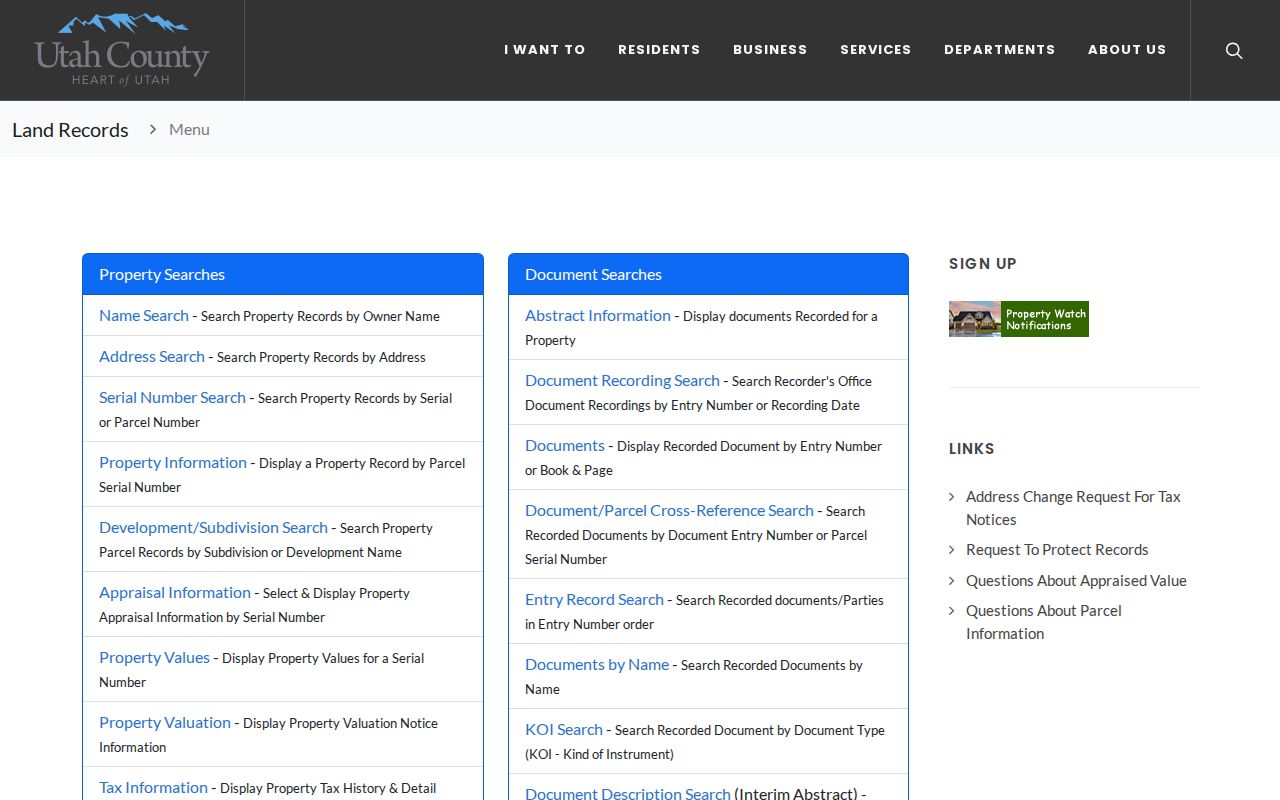
The menu matters because a failed owner-name match does not end the search. A document party, subdivision, book and page, or historic abstract may still identify the American Fork resident.
| Land-record field | Input | Best use |
|---|---|---|
| Owner name | Surname or LAST, FIRST MIDDLE | Current, all, or never-valid parcel records |
| Document party | Grantor or grantee name | Deeds, liens, releases, and other filings |
| Entry record | Entry number plus year, or recording date | A known filing reference |
| Kind of instrument | Code or description | Narrowing a name to one document type |
| Development | Subdivision or project name | Finding parcels within a named development |
The chronology is just as useful as the fields. Official Recorder books span 1870 to the present. The handwritten alphabetical party index runs from 1870 through January 1978, when the computerized party index begins. Handwritten and typed abstracts cover 1870 through September 1985, while online computerized abstracts begin in May 1980. Scans also reach Land Record Book J from 1864 to 1870 and earlier church conveyances dating to 1851.
American Fork Address Search Fields
A parcel result separates the property address from the owner’s tax-mail address. The situs address is where the land sits. The mailing address is where the tax notice goes, and it may point to an owner who lives elsewhere. A legal description identifies the land through survey and plat language. These fields answer different questions, so copying one into every search box can hide a useful match.
The county owner-name form starts with the owner roll.
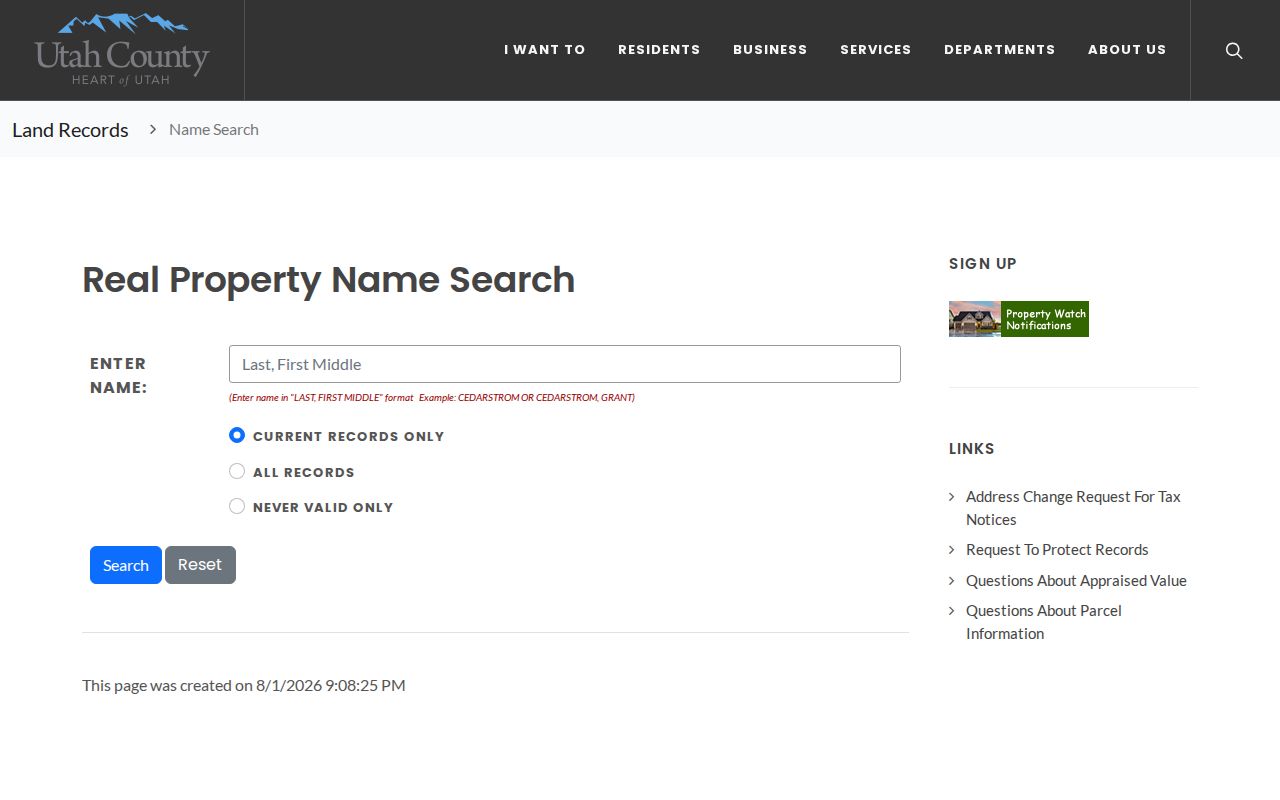
A result can supply the parcel serial, owner name, mailing and situs addresses, legal description, acreage, property type, values, tax history, appraisal details, maps, and recorded abstracts. Use it as a pivot, not as proof that the owner occupies the home.
- Grantor
- The person or entity transferring a property interest.
- Grantee
- The person or entity receiving that interest.
- Parcel serial
- The county key linking the parcel across ownership, assessment, tax, and map records.
- Abstract
- A condensed property history that points toward recorded transfers and related entries.
Map American Fork Record Jurisdiction
An American Fork mailing address does not always prove that a parcel lies within city limits. ZIP delivery areas cross municipal lines, and annexations can change the city office responsible for a permit or local service while the county title history remains continuous. Check the map before sending a city records request. Directional street labels also matter in the local grid: “600 N” is the street name, not the house number.
The Utah County Parcel Map accepts address, owner name, parcel serial, city, and public-land-survey inputs.
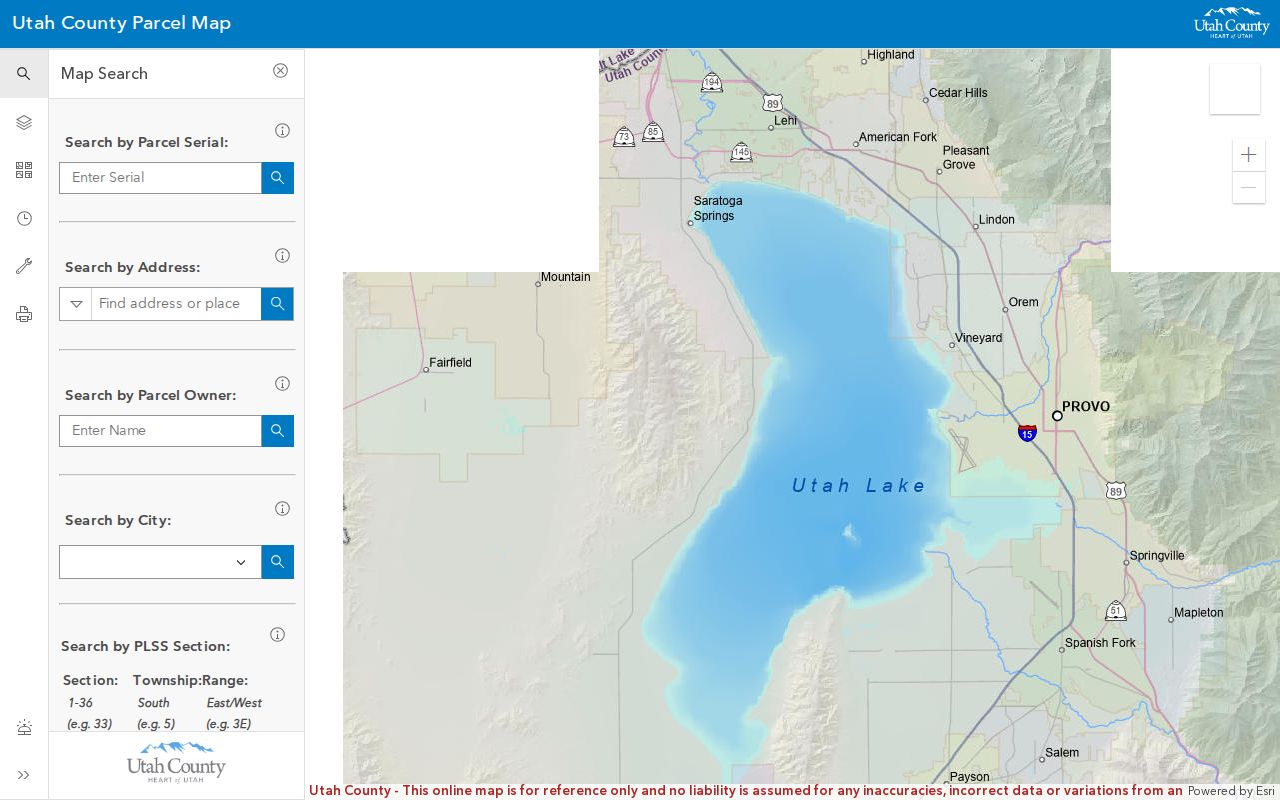
The map can display present or historic parcel geometry and help confirm American Fork jurisdiction. Its historic-parcel date marks entry into the online property system, not the date a deed was recorded, and its taxing description is not a deed-ready legal description.
Note: Keep every E, W, N, and S marker when searching an American Fork address; dropping one can identify a different street.
Search American Fork Court Records
General civil, criminal, domestic, and probate matters for American Fork fall within Utah’s Fourth District Court. The current counter is at 137 N Freedom Blvd. in Provo, and the clerk can be reached at 801-429-1000. American Fork Justice Court handles eligible local class B and C misdemeanors, infractions, and small claims. The North Utah County Juvenile Court remains in American Fork, but juvenile legal and social records are restricted rather than open name directories.
The Utah Courts Xchange information page explains the broad public search route.
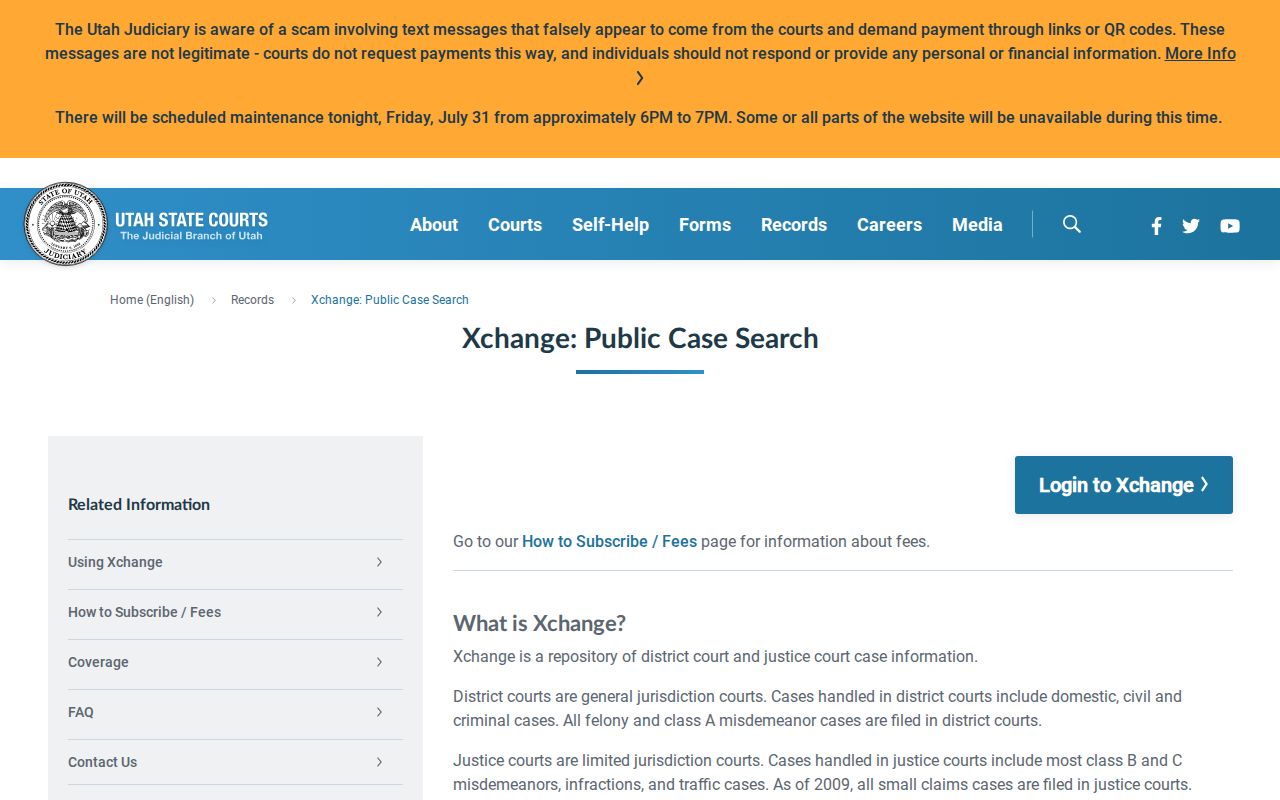
Xchange supports party and case modes, name wildcards, case number, court or county, case type, and date-range controls. Results may show the court, case number and type, filing date, party role, events, attorneys, minutes, balances, and public documents. A filed claim or party label is an allegation or procedural role, not proof that the underlying claim is true.
| Court source | People evidence | Access channel |
|---|---|---|
| Fourth District Court | Public parties and events in district matters | Paid Xchange, free courthouse terminal, or clerk request |
| American Fork Justice Court | Eligible local case parties and dockets | Xchange or justice-court clerk |
| MyCourtCase | A person’s own qualifying case | Free identity-gated access |
| District of Utah | Federal parties and dockets | PACER or federal clerk |
Sealed cases, adoption and expungement files, juvenile records, private pleadings, and protected identifiers will not appear as unrestricted results. Public terminals and the clerk provide the main fallback when a case is not complete online.
Find American Fork Vital Records
Utah County health offices and the Utah Office of Vital Records and Statistics issue eligible Utah birth, death, marriage, and divorce certificate products. A recent certificate is an identity record, not a public name directory. Orders require a complete application, valid identification, the current fee, and proof of relationship or legal need when the requester is not the subject. Channels include online, mail, and eligible local in-person service; the state office offers phone and email help but no public walk-in window.
Age changes access. Utah birth records open after 100 years, death records after 50 years, and marriage or divorce records after 75 years under Title 26B, Chapter 8. The Utah State Archives then provides indexes, image groups, and reference help. Its Utah County material includes birth and death registers from 1898 through 1905 and marriage-license applications. The statewide birth index searches names from 1905 through 1912, with Soundex and browse options for other early-year groups.
A divorce abstract and a court case file are different products. The abstract confirms the registered event. Public docket entries, orders, and a decree come from the district court, while private or sealed portions remain withheld.
Note: Check the live Utah vital-record fee page before mailing an application because the July 2026 schedule replaced amounts printed on an earlier form.
American Fork Library Name Search
The American Fork Library’s local-history collection can turn a faint family or classmate memory into a useful record trail. Digitized American Fork High School yearbooks help confirm attendance, class year, clubs, faces, and spelling. The American Fork Citizen runs from 1906 through 2009 and adds social notices, school news, civic groups, engagements, marriages, ads, addresses, obituaries, and relatives. City-royalty photographs cover 1928 through 1983, while historic resident images and named oral histories add context that a county index cannot.
Search a yearbook first when the school and rough year are known. Then search the newspaper with the name, initials, maiden name, nickname, club, or relative. Newspaper text recognition can miss worn type, so browsing near a known event date may succeed when an exact name fails. For a death, compare the obituary with the cemetery map, vital index, probate docket, and land transfers. For settlement-era families, add county registers, federal census schedules, church records, and the State Archives catalog.
The official local-history pages do not verify one continuous shelf run of American Fork telephone, Polk, or reverse directories. Call the library about physical holdings before a visit rather than assuming a year exists.
American Fork Cemetery Records Story
The city cemetery is both a working municipal record and a local history source. Its roughly 23 acres contain about 23,500 plots, and the city links to a mapped name search. The cemetery counter at 26 W 600 N can confirm burial information through the sexton. Because the public map uses an outside transcription platform, treat it as a locator and ask city staff for official confirmation when a record must serve as proof.
A 1,580-foot stone wall along the south and east sides was built in 1937 and 1938 as a Works Progress Administration project. Local quartzite, sandstone, and marble make the wall a physical record of New Deal labor. Cemetery sources also identify founding figures Arza Adams and Stephen Chipman, Timpanogos Cave discoverer Martin Hansen, and railroad figure Edward Robinson among notable burials.
The older pioneer cemetery at 300 N 100 E served from 1852 to 1868, with city records identifying 85 pioneer and Native American burials. Search both sites when a nineteenth-century American Fork death predates statewide civil registration.
American Fork License and Business Lookup
State credential and corporation records can separate people with similar names. Utah’s professional-license tool searches by name and profession or by license number. It allows a beginning-with name mode and a broader containing mode, plus profession filters. A result verifies the credential and status published by the responsible licensing division. It does not establish a home address or prove that every person with that name is the same individual found in a parcel or case file.
The Utah license verification search shows the name and profession controls.
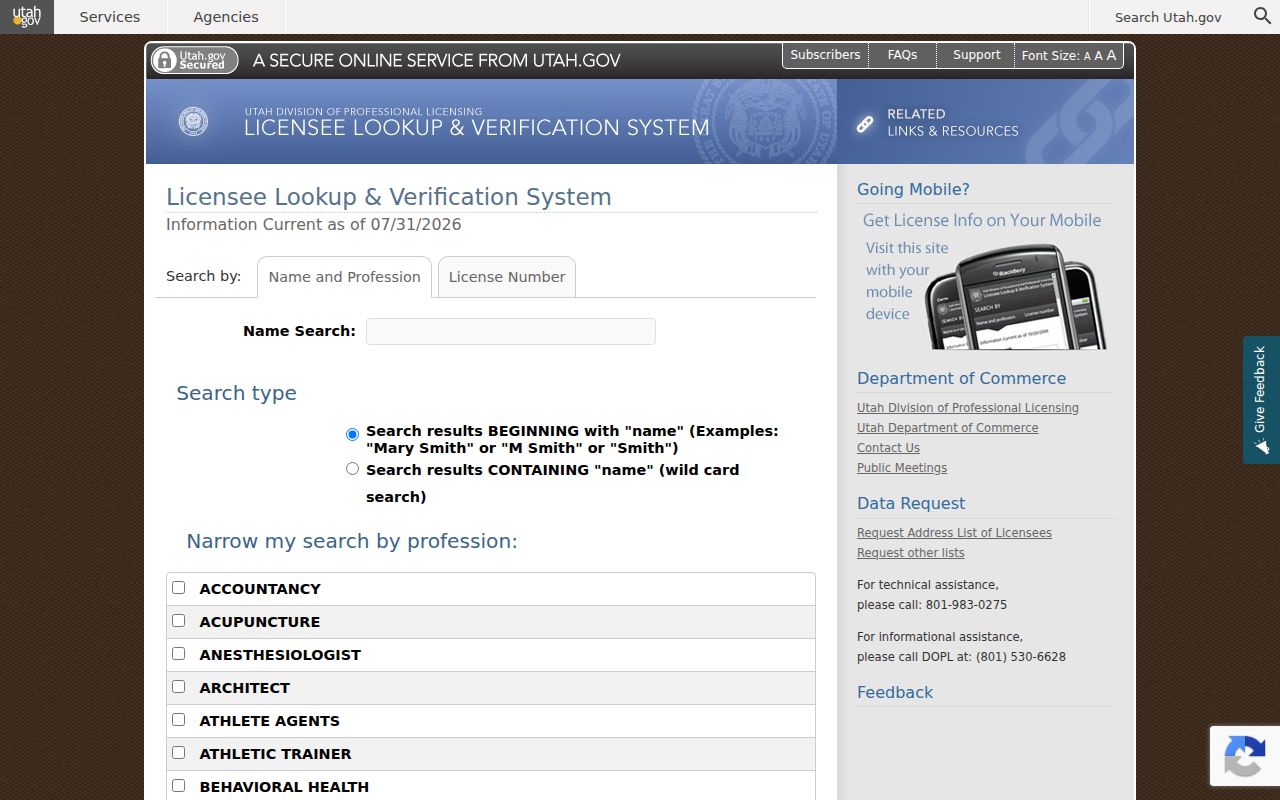
Match a license result to an American Fork record through a middle name, profession, status, or other public detail. Formal verification is a separate service from the free lookup.
Search American Fork Business Records
A corporation filing can place a named agent or principal beside an entity and filing address. That makes state business records a useful second check after a license, deed, or city permit. Business names can change, so search known legal names and assumed names when the source allows it.
The Utah business entity search is the official route for corporations and registered business names.
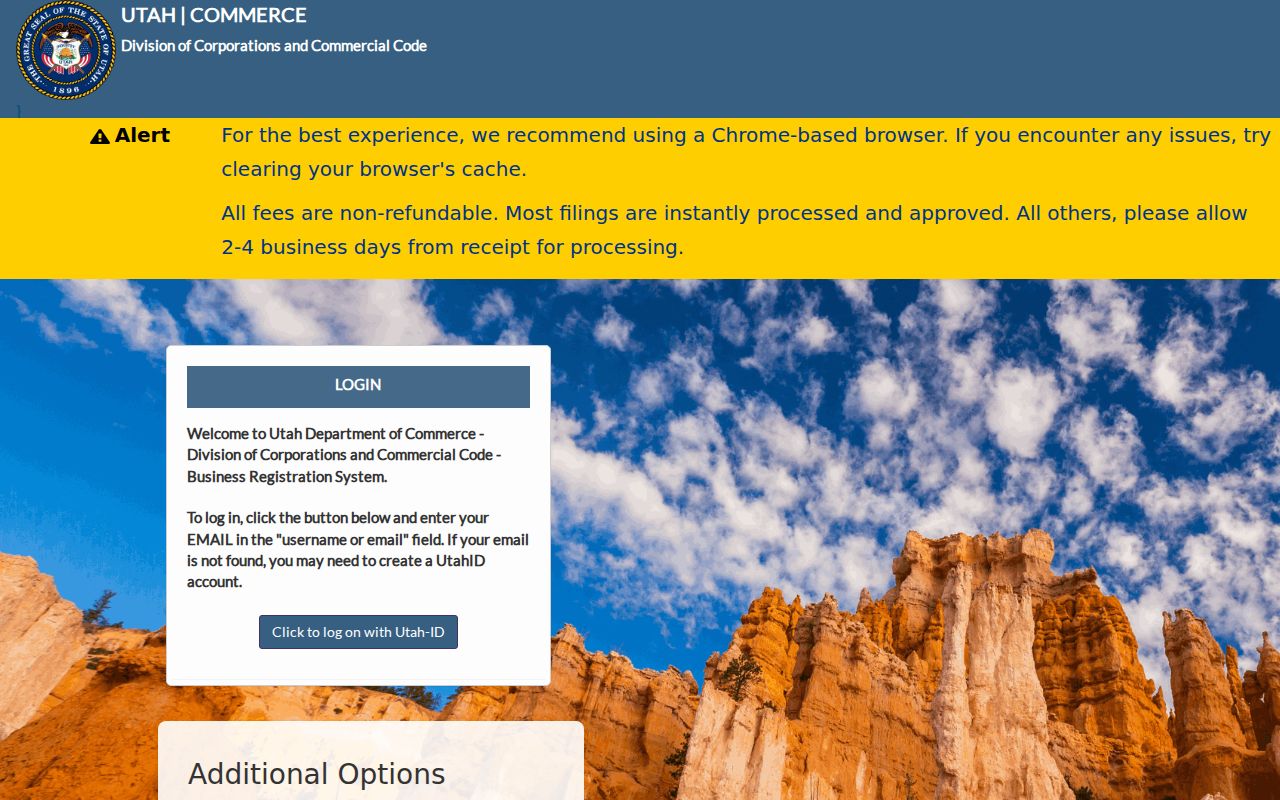
Basic entity results may identify a business name, type, status, registration number, agent, address, and filing history. A state entity record differs from a voluntary chamber listing and from an American Fork city license file. When a needed city licensing record is not online, request it by business name, address, and date range through the responsible city department.
Check American Fork Voter Records
American Fork registrations belong to Utah County’s part of Utah’s statewide voter system. The individual lookup requires first name, last name, full date of birth, registered street address, and reCAPTCHA. A successful identity-gated check can return registration status, precinct and districts, party affiliation, polling and election information, ballot tracking, and elected officials. It is meant for a voter to verify a record, not for open surname browsing.
Utah separates releasable voter fields from private identifiers such as full birth date, driver or state identification data, Social Security number fragments, email, phone, citizenship evidence, and at-risk documentation. Protected-voter identity and address information must not be reconstructed through other sources. The full rules for the self-lookup, public file, and protections are covered with American Fork voter registration records.
Use American Fork records only for lawful personal research. Stop when an address or identity is protected, and never use a record to stalk, harass, threaten, or harm anyone.
Request American Fork City Records
The city’s September 2025 GRAMA form is the fallback for municipal records that lack a public index. It asks for the responsible department, requester contact details, and a detailed description that can include names, addresses, dates, and record types. The requester chooses inspection or copies, may set a cost ceiling, and can seek a supported fee waiver or expedited public-benefit response. The submitted form itself becomes a public record.
Send a focused request to the city department that keeps the material. City Hall accepts requests through its form and department channels. Email, fax, mail, and counter options may apply to state or county entities, while court files follow judiciary rules. American Fork states that ordinary city responses come as soon as reasonably possible and no later than ten business days; a properly supported expedited request uses five business days. Copy charges and staff time after the first 15 minutes may apply.
Ask for an existing record, not an answer to a question. A permit request works better with the project address, date range, permit type, owner or applicant name, and desired electronic format. A police incident report should be requested from city records, while the filed court case belongs with the court. Utah County and state records need their own custodians.
American Fork Unclaimed Property Search
Utah’s official unclaimed-property database offers another careful name trail. Search by an owner’s personal or business name and review the reporting organization and property type. A listing can connect a person to an older account or holder, but it does not prove a current address. Common names need support from property, business, license, court, or historical records before a match is treated as the same American Fork resident.
The Utah MyCash search provides the free official owner-name route.
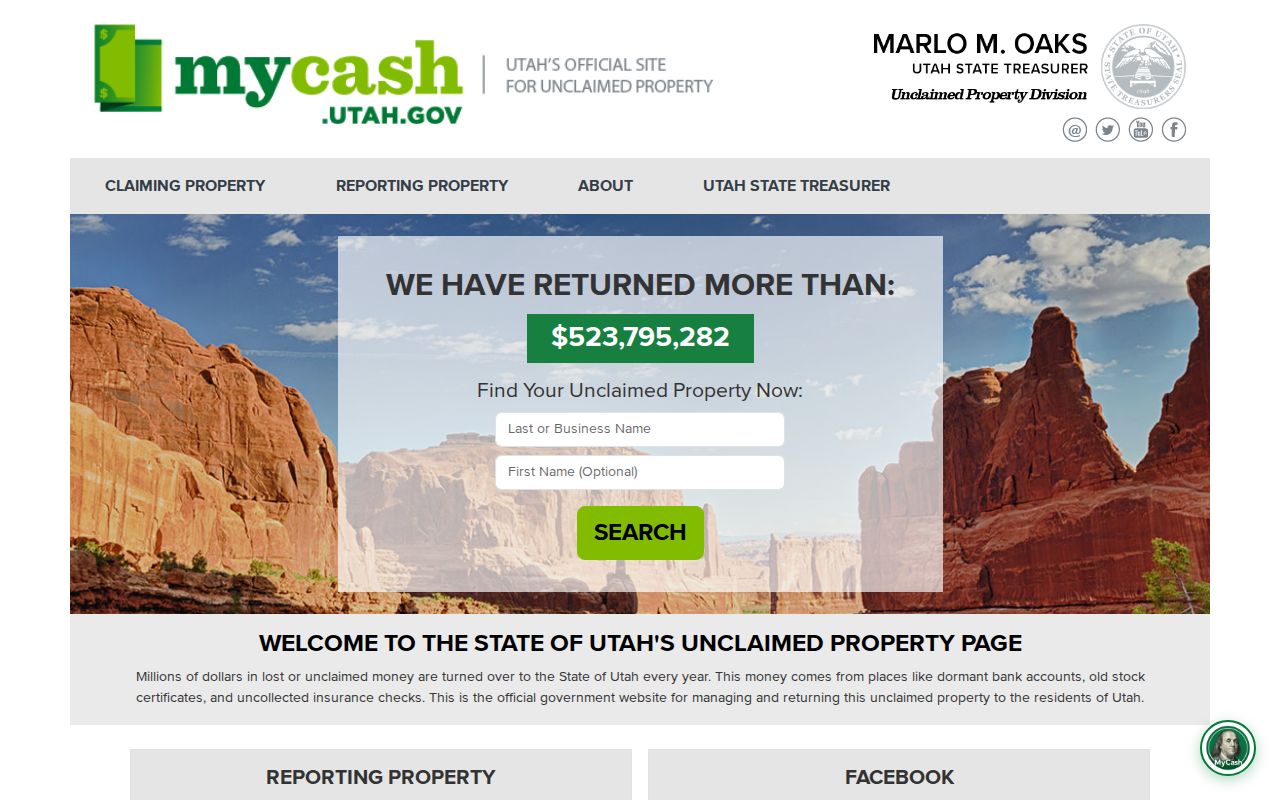
Claims require identity and ownership proof. No paid finder is needed to submit one through the state, and a MyCash lead should be verified before it is joined to another person’s file.
Compare American Fork Search Sources
Official records and commercial people-finder compilations answer different questions. A county index identifies the custodian, record role, and source document. A commercial compilation may blend old government and market data into a convenient name, phone, address, or relative result, but it can merge people, preserve stale addresses, or omit the context needed to interpret a filing. Use it as a possible lead, then return to the office that holds the primary record.
| Search source | Strength | Key limit |
|---|---|---|
| County owner and deed indexes | Direct parcel and recorded-party trail | An owner may not be the occupant |
| Court docket | Named parties, roles, filings, and events | A filing is not proof of its allegations |
| Vital certificate or archive image | Strong event and family evidence | Recent certificates have access limits |
| Library and cemetery collections | Local context, names, faces, and relationships | Transcriptions and text recognition need checks |
| Commercial compilation | Broad lead across several data types | May be stale, mismatched, or incomplete |
American Fork search work is strongest when the trail stays transparent. Record the exact name searched, date, portal, result key, and reason two records appear connected. Respect redactions and confidentiality programs. If an official source withholds a field, a second database is not permission to work around that protection.